

About Brushless DC Motor Designs
Brushless DC motor design focuses on delivering high efficiency, torque, and speed for a wide range of applications. Unlike traditional brushed motors, which rely on mechanical commutation through rotating armatures and brushes, brushless DC motors use electronic commutation. This reduces wear and friction while improving performance.
With fewer moving parts, a brushless DC motor offers a longer lifespan, typically limited only by wear on the ball bearings. The lightweight construction and compact size also allow for use in space-constrained systems where efficiency and power density are critical.
Why Brushless DC Motors Design Considerations Matter for the Industrial Market
A key element of brushless DC motor design in industrial applications is minimizing inertia. Brushed motors feature heavy metal components like iron cores, commutators, and coils mounted on the same shaft. These increase inertia and reduce responsiveness in industrial positioning applications.
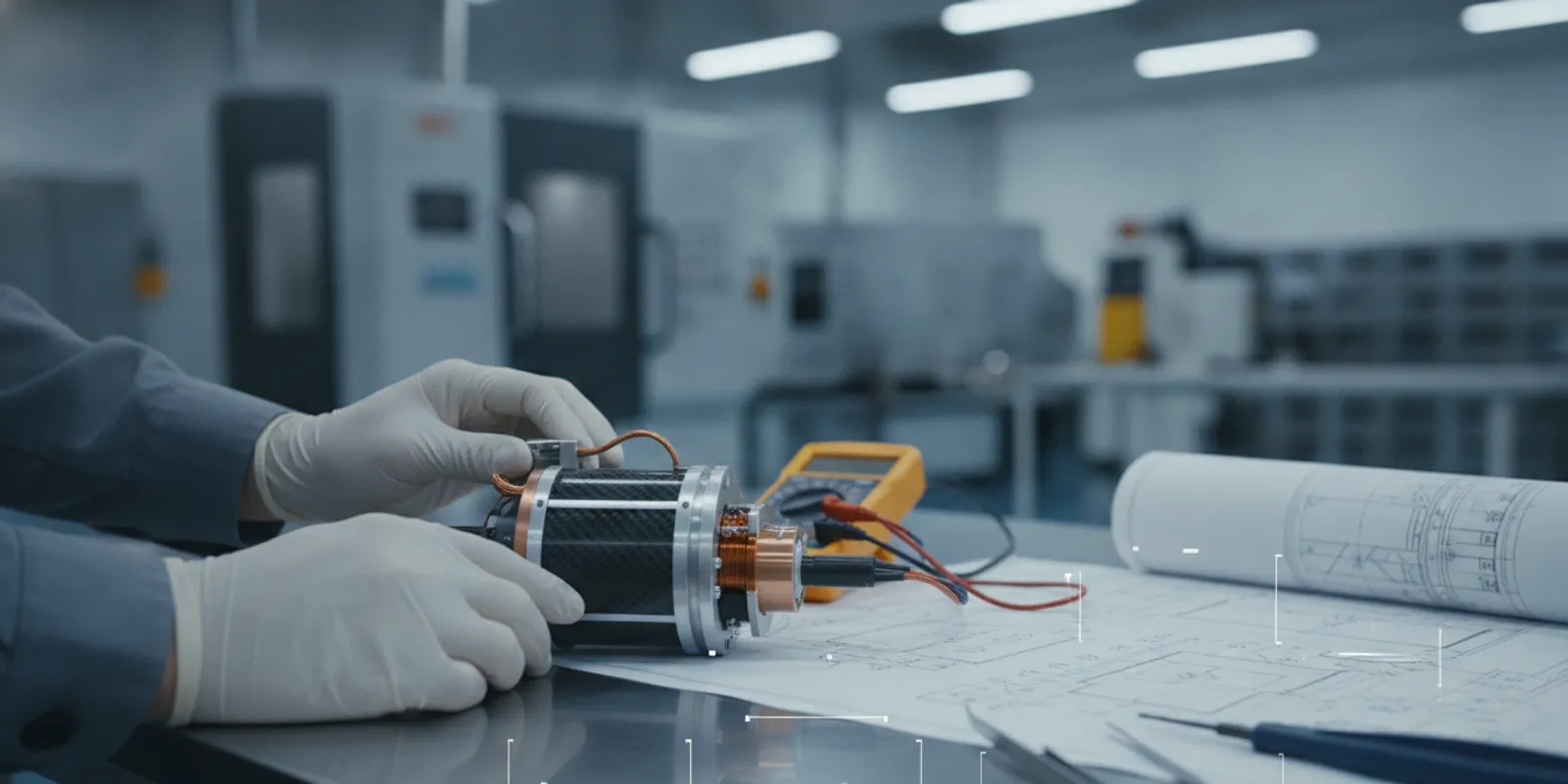
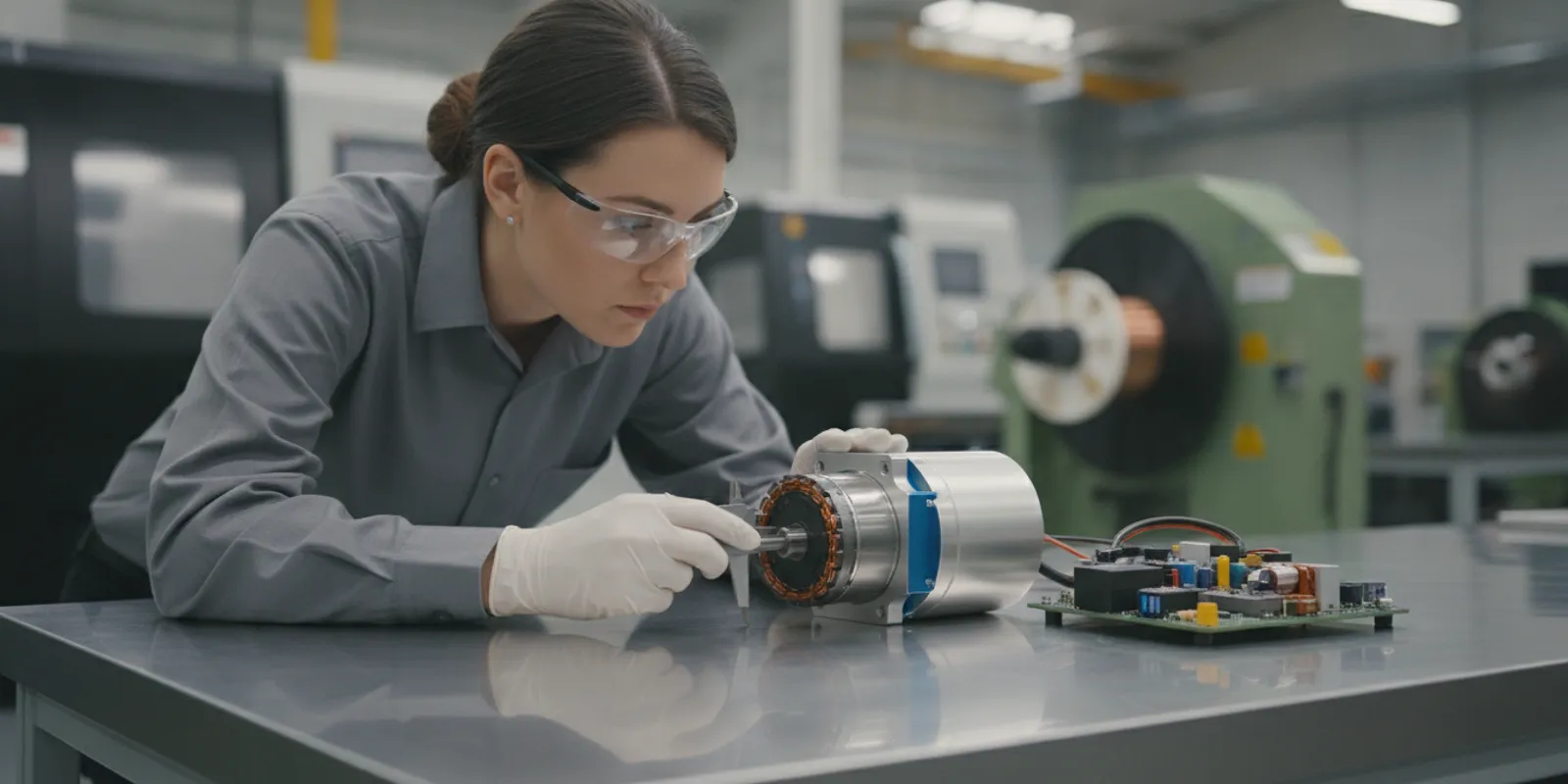
In contrast, an industrial brushless motor is designed with permanent magnets mounted on the rotor and coil windings on the fixed stator. This configuration allows for electronic commutation, which generates a rotating magnetic field as energy is received from semiconductor switching circuits. This interaction causes the rotor to turn.
The improved efficiency of brushless DC motors makes them ideal for industrial tasks such as:
- Robotic Applications
- Linear Draws
- Industrial nut runners
- Conveyors
- Air pumps
- Electric grippers
- Electronic assembly tools
Brushless DC Motor Types and Design Best Practices
Best practices for brushless DC motor design involve considering turning speed, torque, and thermal performance to meet application demands. Many brushless DC motor applications rely on consistent operation, variable speed control, and accurate motion.
Additionally, frameless motors are becoming more prevalent in the industrial sector due to space constraints without sacrificing performance.
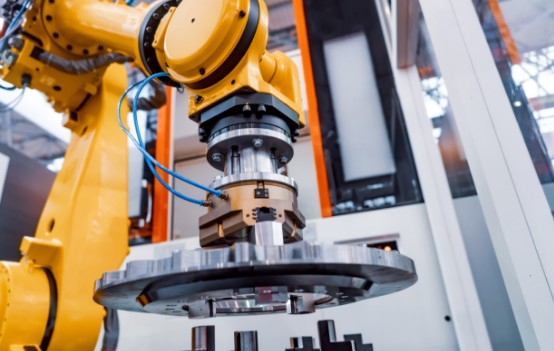
For robotic applications, a well-designed industrial brushless motor powers joints that perform tasks like welding, painting, and automated assembly. These motors are preferred for their power density, compact footprint, and low maintenance requirements. They support high torque and precise control, which are essential in automated manufacturing systems.
Custom Industrial Brushless Motor Solutions from CMI
The advantages of brushless DC motor design make it a smart choice for demanding industrial environments. At Composite Motors, Inc. (CMI), we specialize in both frameless and framed custom-engineered, American-made industrial brushless motors built to meet your specific performance needs.
Whether you need a high-speed servomotor or a compact actuator motor, our engineers can create a solution tailored to your system’s requirements. To learn more or discuss a custom motor project, contact us today.
Frequently Asked Questions About Industrial BLDC Motor Design
What should an industrial BLDC motor design account for?
An industrial BLDC motor design should account for the application’s required turning speed, torque, thermal performance, available space, and motion-control needs. The right combination depends on the equipment and its operating demands.
How can simulation support BLDC motor design?
Simulation can help engineers examine how a proposed motor design responds to expected speed, torque, and thermal conditions before hardware is built. It should be used with physical testing against the application’s requirements.
What role do stator windings play in a BLDC motor?
The stator holds the coil windings. When semiconductor switching circuits energize the windings, they create a rotating magnetic field that interacts with the rotor’s permanent magnets and produces rotation.
Why should the motor and controller be considered together?
A BLDC motor uses electronic commutation, so the motor’s electrical characteristics and the controller’s switching and control requirements must be matched to the application’s speed, torque, and motion needs.
How should an industrial BLDC design be validated?
Validate the design against the application’s required speed, torque, thermal performance, size, and control behavior. Testing should use the intended operating conditions and the approved motor and controller configuration.