


Built in Brooksville, Florida
352-799-2599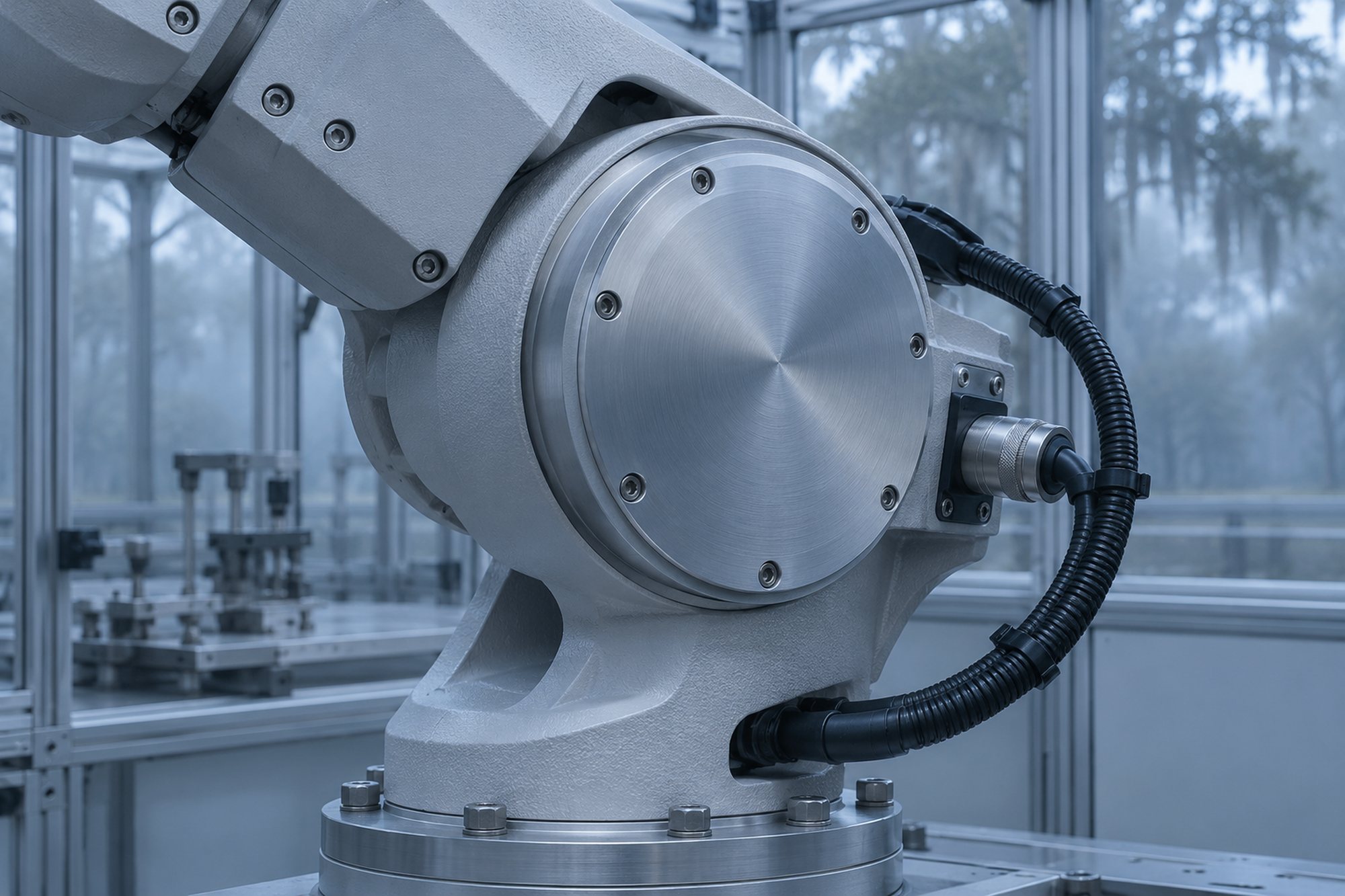
Brushless motors and matched controllers for robotics
A robot joint lives or dies on how the motor and its drive work together. Send your joint's envelope and limits and we'll look at it with you.
Motor and controller from one supplier, built in Brooksville, Florida.
What goes into a robot joint motor?
The most common motorized robot joint uses a brushless permanent magnet frameless torque motor kit, an absolute encoder kit and a high ratio zero backlash gear, driven by a servo drive.
- GearHigh ratio, zero backlash.Part of your system
- EncoderAbsolute position feedback.Part of your system
- MotorBrushless permanent magnet.Built by CMI
- DriveThe controller that runs the motor.Built by CMI
Ask about cogging torque
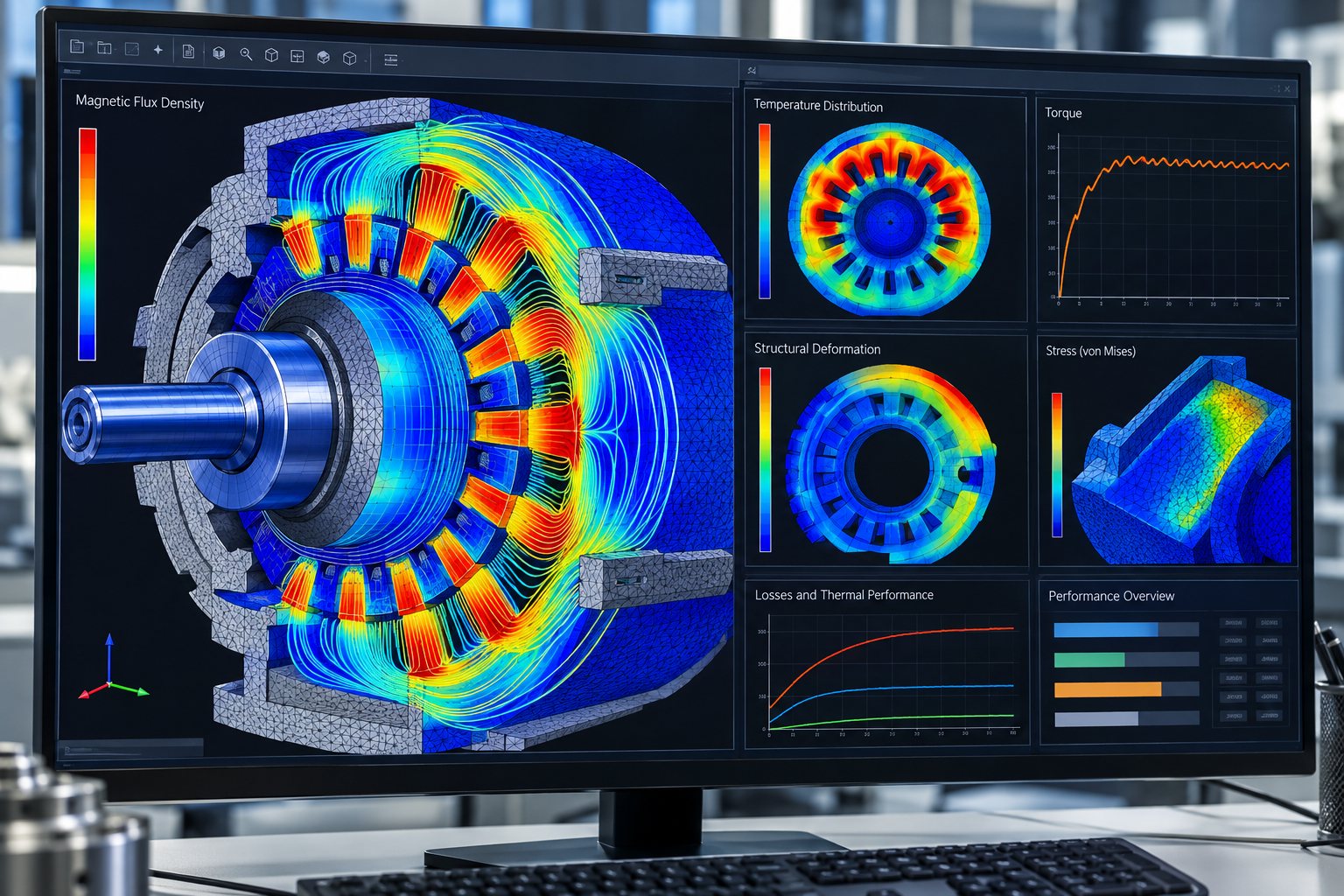
Cogging torque is undesired in all cases for a robot joint, and cogging data is not normally shown in a motor datasheet, so engineers need to ask the supplier. With a custom motor, cogging is part of the design conversation from the start. Tell us how smooth the joint has to be.
Torque within thermal limits
Motor constant Km is the true indicator of a motor's ability to output torque under thermal constraints, and Km increases with diameter faster than with axial length. That is why the shape of your joint envelope matters as much as its volume. Send both the diameter and the length you have.
Short and wide: more diameter
Long and narrow: more axial length
A drive matched to the motor, not bolted on
Robot joint drives increasingly use field-oriented control, sinusoidal servo drives, and drives are getting smaller and located closer to the motor. We build motors and the electronics that drive them.
- BLDC controllers: drive electronics built with the motor they run.
- Sealed controllers: including hermetically packaged DC controllers.
- Brushless DC motors: for systems where weight and space are tight.

Servo motors for closed-loop motion
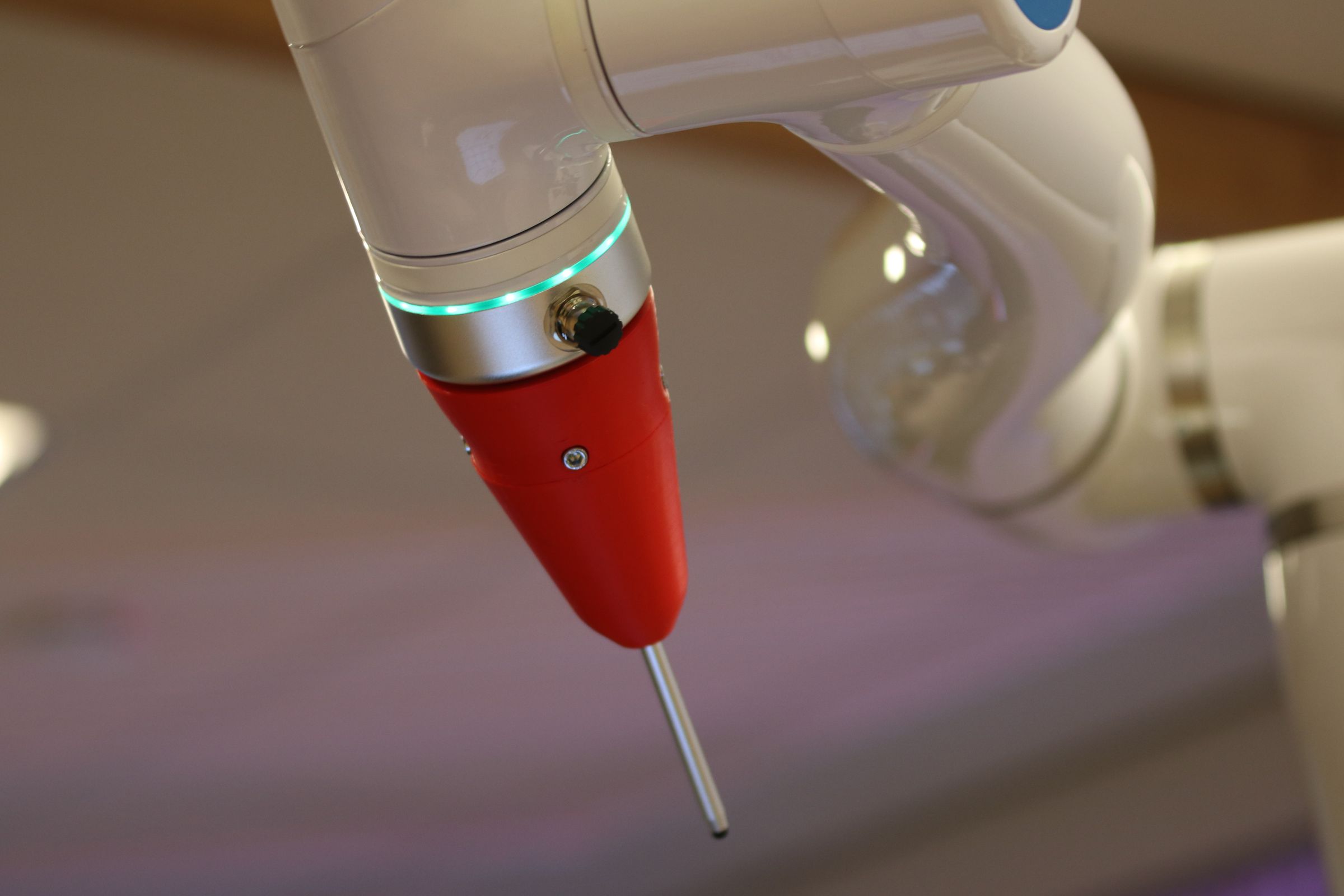
Servo motors use position feedback in a closed loop and are used in robotics, CNC machinery and automated manufacturing. Tell us the feedback your system uses, so the motor and controller are engineered to suit it. More on industrial motion.
What we need from your joint spec
A few lines on each is enough. You don't need a finished spec or a formal RFQ.
- EnvelopeDiameter and axial length available.
- DutyThe torque and motion the joint must deliver, and how often.
- SmoothnessHow much cogging the joint can tolerate.
- FeedbackThe encoder or sensor your system uses.
- DriveWhere the controller sits and how it is controlled.
- EnvironmentAnything the joint is exposed to.
- Quantity rangeNow and later.
Start from scratch, from your print or from a part
Every project starts differently. Tell us where yours stands.
Custom design
Bring the problem and the limits. We engineer the motor or controller to fit.
Build-to-print
You have the drawing. We manufacture to it.
Reverse engineering
Replacing an offshore or discontinued part? We work from the part you have.
Robotics motor questions
When is a custom motor worth it for a robot?
When a standard motor forces a compromise on envelope, smoothness or how the motor and drive work together. Start a conversation when you have a duty cycle, a package limit, and a quantity range, even if the specification is still open.
Send us your joint or axis
Send the envelope, the duty and the drive you have in mind. The people who engineer the motor and its controller will read it together.